
Book V : Sundara Kanda - Book Of Beauty
Seetha calls out Rama and others and bursts into a wail not being able to endure the threats of ogre women. | 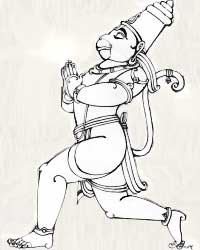 |
atha t˜s˜Õ vadantŸn˜Õ paruÿaÕ d˜ruõaÕ bahu |
r˜kÿasŸn˜masaumy˜n˜Õ ruroda janak˜tmaj˜ || 5-25-1
1, atha = thereafter; taasaam =(as) those; raakshasiinaam = ogre women; asaumyaanaam = with a cruel nature;vadantiinaam = were speaking; bahu =a lot; parushham = harshly; daaruNam = (and) horribly;janakaatmajaa = Seetha; ruroda = cried.
As those ogre woman with a cruel nature were speaking a lot harshly and horribly, Seetha cried.
evamukt˜ tu vaidehŸ r˜kÿasŸbhirmanasvinŸ |
uv˜ca paramatrast˜b˜ÿpagadgaday˜ gir˜ || 5-25-2
2. evam = thus; uktaa = being spoken to; raakshasiibhiH = by ogre women; vaidehii = Seetha; manasvinii = with a good mind; paramatrastaa = being frightened a lot; baashhpa gadgadayaa giraa = with a voice indistinct due to tears; uvaacha = spoke (as follows).
Thus being spoken to by ogre women, Seetha with a good mind being frightened a lot spoke as follows with a voice indistinct due to tears.
na m˜nuÿŸ r˜kÿasasya bh˜ry˜ bhavitumarhati |
k˜maÕ kh˜data m˜Õ sarv˜ na kariÿy˜mi vo vaca× || 5-25-3
3. maanushhii = a human woman; na arhati = is not suited; bhavitum = to become; bhaaryaa = a wife; raakshasasya = of an ogre; sarvaaH = all of you; khaadata = eat; maam = me; kaamam = according to your desire;na karishhyaami = I will not do; vaH = (according to) your; vachaH = words.
"A human woman is not suited to become a wife of an ogre. All of you eat me according to your desire. I will not do according to your words."
s˜ r˜kÿasŸmadhyagat˜ sŸt˜ surasutopam˜ |
na þarma lebhe du×kh˜rt˜ r˜vaõena ca tarjit˜ || 5-25-4
4. raakshsaiimadhyagataa = being in the middle of ogre women; tarjitaa= being frightened; raavaNena cha = by Ravana also; surasutopamaa = like a daughter of gods; saa siitaa = that Seetha; na lebhe = did not get; sharma = comfort; duHkhaartaa = being tormented by grief.
Being in the middle of ogre women, being frightened by Ravana also, like a daughter of gods, that Seetha did not get comfort being tormented by grief.
vepate sm˜dhikaÕ sŸt˜ viþantŸ v˜ðgam˜tmana× |
vane yath˜ paribhraÿ÷˜ m®gŸ kokairiv˜rdit˜ || 5-25-5
5. mR^igiiva = like a fawn; vane = in a forest; yuudhaparibhrashhTaa = lost from its herd; arditaa = tormented; kokaiH = by wolves; vishantiiva = (Seetha was) as though sinking (into); aatmanaH = own; aN^gam = body; vepate sma = (and) shook; adhikam = a lot.
Like a fawn in a forest lost from its herd and tormented by wolves, Seetha was as though sinking into own body and shook a lot.
s˜ tvaþokasya vipul˜Õ þ˜kh˜m˜lambya puÿpit˜m |
cintay˜m˜sa þokena bhart˜raÕ bhagnam˜nas˜ || 5-25-6
6. saa tu = that Seetha; bhagna maanasaa = with a broken heart; shokena = due to grief; aalambya = holding; pushhpitaam shaakhaam = a flowering branch; vipulaam = which was wide; ashokasya = of Ashoka tree; chintayaamaasa = thought; bhartaaram = about husband.
That Seetha with a broken heart due to grief, held a wide flowering branch of Ashoka tree and thought about Her husband.
s˜ sn˜payantŸ vipulau stanau netrajalasravai× |
cintayantŸ na þokasya tad˜ntamadhigacchati || 5-25-7
7. tadaa = then; saa = that Seetha; snaapayantii = washing; vipulau stanau = Her wide breasts; netra jala sravaiH = with a flow of tears from eyes; chintayantii = (and) thinking; na adhigachchhati = did not get; antam = end; shokasya = of sorrow.
Then that Seetha washing Her wide breasts with a flow of tears from eyes and thinking, did not get end of sorrow.
s˜ vepam˜n˜ patit˜ prav˜te kada¹Ÿ yath˜ |
r˜kÿasŸn˜Õ bhayatrast˜ vivarõavadan˜bhavat || 5-25-8
8. saa = that Seetha; vepamaanaa = was shaking; kadaLii yathaa = like a plantain tree; patitaa = fallen down; pravaate = in an exceedingly windy place; raakshasii bhaya saMtrastaa = trembling with fear of the ogre women; abhavat = became; vivarNavadanaa = with a pale face.
That Seetha was shaking like a plantain tree fallen down in an exceedingly windy place, trembling with fear of the ogre women, and became with a pale face.
tasy˜× s˜ dŸrghavipul˜ vepanty˜ sŸtay˜ tad˜ |
dad®þe kampinŸ veõŸ vy˜¹Ÿva parisarpatŸ || 5-25-9
9. saa kampinii veNii = that moving plait; diirgha vipulaa = which was wide and long; tasyaaH paramstriyaaH = of that best woman; vepantyaaH = trembling; dadR^ishe = was seen (to be); vyaaLiiva = like a serpant;parisarpatii = in motion.
That moving plait, which was wide and long, of that best woman was seen to be like a serpant in motion.
s˜ ni×þvasantŸ du×kh˜rt˜ þokopahatacetan˜ |
˜rt˜ vyas®jadaþr¨õi maithilŸ vilal˜pa ca || 5-25-10
10. saa maithilii = that Seetha; duHkhaartaa = tormented by grief; shokopahata chetanaa = with a mind hit by sorrow; aartaa = struck by calamity; niHshvasantii = was sighing; nyasR^ijat = let down; ashruuNi = tears; vilalaapa cha = and also cried.
That Seetha tormented by grief, with a mind hit by sorrow, struck by calamity was sighing and let down tears and also cried.
h˜ r˜meti ca du×kh˜rt˜ h˜ punarlakÿmaõeti ca |
h˜ þvaþru mama kausalye h˜ sumitreti bh˜minŸ || 5-25-11
11. bhaaminii = Seetha; duHkhaartaa = being tormented by grief (said) ; haa raameti = Oh! Rama! punaH = again; haa lakshmaNeti = Oh! Lakshmana; haa kausalye = Oh! Kausalya; mama shvashru = my mother-in-law; haa sumitreti = Oh! Sumitra.
Seetha being tormented by grief said : "Oh! Rama!" and again "Oh! Lakshmana!","Oh! Kausalya!, my mother-in-law" "Oh! Sumitra!"
lokaprav˜da× satyo'yaÕ paõýitai× samud˜h®ta× |
ak˜le durlabho m®tyu× striy˜ v˜ puruÿasya v˜ || 5-25-12
yad˜hamevaÕ kr¨r˜bhŸ r˜kÿasŸbhirih˜rdit˜ |
jŸv˜mi hŸn˜ r˜meõa muh¨rtamapi du×khit˜ || 5-25-13
12, 13. aham = I; evam = thus; aarditaa =being tormented; kruuraabhiH raakshasiibhiH = by cruel ogre women; iha = here; hiinaa = lacking; raameNa = Rama; duHkhaartaa = being tormented by grief; yadaa = when; jiivaami = I am living; muhuurtamapi = even for a moment; mR^ityuH = death; akaale = at wrong time; striyaaH vaa = to woman; purushhasya = or to a man; durlabhaH = is hard; samudaahR^itaH = (thus) being said;lokapravaadaH = the popular saying in the world; satyaH = is true.
"I thus being tormented by cruel ogre women here lacking Rama, being tormented by grief, when I am living even for a moment,' death at wrong time to woman or to a man is hard' - thus being said this popular saying in the world is true."
eÿ˜lpapuõy˜ k®paõ˜ vinaþiÿy˜myan˜thavat |
samudramathye nau× p¨rõ˜ v˜yuvegairiv˜hat˜ || 5-25-14
14. eshhaa = this me; alpapuNyaa = with small merit;kR^ipaNaa = wretched; anaathavat = like an orphan; vinashishhyaami = will perish; nauH iva = like a ship; samudramadhye = in the middle of the ocean; aahataa = being hit; vaayuvegaiH = by the speed of wind.
"This me with small merit,wreched, like an orphan, will perish like a ship in the middle of the ocean being hit by the speed of wind."
bhart˜raÕ tamapaþyantŸ r˜kÿasŸvaþam˜gat˜ |
sŸd˜mi khalu þokena k¨laÕ toyahataÕ yath˜ || 5-25-15
15. apashyantii = not seeing; bhartaaram = my husband; tam = that Rama;aagataa = obtaining; raakshasii vasham = control of ogre women; tiiram yathaa = like a bank; toyahatam = hit by water; siidaami khalu = I am verily perishing; shokena = with sorrow.
"Not seeing my husband that Rama and obtaining control of ogre women like a bank hit by water I am verily perishing with sorrow."
taÕ padmada¹apatr˜kÿaÕ siÕhavikr˜ntag˜minam |
dhany˜× paþyanti me n˜thaÕ k®tajñaÕ priyav˜dinam || 5-25-16
16. dhanyaaH = (only) fortunate; pashyanti = see; tam = that; me = my; naatham = husband; padmadaLapatraaksham = with eyes like petals of an expanded lotus; siMha vikraanta gaaminam = walking with the gait of a lion; kR^itajJNam = correct in conduct; priyavaadiam = pleasant talker;
"Only fortunate see that my husband with eyes like petals of an expanded lotus, walking with the gait of a lion, correct in conduct and a pleasant talker."
sarvath˜ tena hŸn˜y˜ r˜meõa vidit˜tman˜ |
tŸkÿõaÕviÿamiv˜sv˜dyadurlabhaÕ mama jŸvitam || 5-25-17
17. mama = to me; hiinaayaaH = lacking; tena= that Rama; viditaatmanaa = with a famous soul; aasvaadyeva = like after eating; tiikshNam vishham = a pungent poison; jiivitam = life; sarvathaa = in all ways; durlabham = is hard.
"To me lacking that Rama with a famous soul, like after eating a pungent poison life in all ways is hard."
kŸd®þaÕ tu mah˜p˜paÕ may˜ janm˜ntare k®tam |
yenedaÕ pr˜pyate du×khaÕ may˜ ghoraÕ sud˜ruõaÕ || 5-25-18
18. yena = by what; mayaa = by me; praapyate = obtaining; idam = this; duHkham = grief; ghoram = which is horrible;sudaaruNam = very dreadful; kiidR^isham = what kind of; mahaa paapam = great sin;kR^itam = has been done; mayaa = by me; janmaantare = in an other life.
"By what this horrible and very dreadful grief is obtained by me, what kind of great sin had been done by me in another life."
jŸvitaÕ tyaktumicch˜mi þokena mahat˜ v®t˜ |
r˜kÿasŸbhiþca rakÿyanty˜ r˜mo n˜s˜dyate may˜ || 5-25-19
19. vR^itaa = together; mahataa shokena = with great grief; ichchhaami = I desire; tyaktum = to give away; jiivitum = life; kaamaH = (this) desire; na avaapyate = is not obtainable; mayaa = by me; surakshitaa = I am well protected; raakshasiibhiH = by ogre women.
"Together with great grief, I desire to give away my life. This desire is not obtainable by me. I am well protected by ogre women."
dhigastu khalu m˜nuÿyaÕ dhigastu paravaþyat˜m |
na þakyaÕ yatparityaktum˜tmacchandena jŸvitam || 5-25-20
20. dhik astu = fie; maanushhyam = upon human condition; dhik astu = fie; paravashyataam = upon being in the control of others; yat = by what reason; aatmachchhandena = according to own desire; na shakyam = it is not possible; parityaktum = to give up; jiivitam = life.
"Fie upon human condition! Fie upon being in the control of others. By what reason it is not possible according to own desire to give up life."
ity˜rÿe þrŸmadr˜m˜yaõe ˜dik˜vye sundarak˜õýe pañcaviÕþa× sarga×
Thus completes 25th Chapter of Sundara Kanda of the glorious Ramayana of Valmiki, the work of a sage and the oldest epic.
© July 2005, Kishore Kopalle